

Discovering a cavity in your child’s tooth is never fun news — but the good news is that modern dentistry offers more than one way to fix it. If your child’s dentist has mentioned “filling options,” you’ve probably found yourself wondering: should you go with a traditional silver filling or a tooth-colored white filling?
This is one of the most common questions parents ask during pediatric dental visits, and for good reason — the choice affects your child’s comfort, appearance, safety, and even the long-term health of their teeth. In this guide, Dr. Swapnil Rachha from Soulful Dental Care breaks down everything you need to know so you can make a confident, informed decision.
Why Do Kids Need Dental Fillings?
Cavities in children are extremely common, largely because baby teeth have thinner enamel than permanent teeth, making them more vulnerable to decay. According to experts in pediatric dentistry in Pune, early detection and timely treatment can prevent a small cavity from turning into a much bigger dental problem down the line. Common causes include:
- Frequent snacking on sugary or starchy foods
- Inconsistent brushing habits
- Insufficient fluoride exposure
- Deep grooves in molars that trap food and bacteria
- Genetics and enamel quality
Left untreated, a cavity can grow deeper, leading to pain, infection, or even premature tooth loss. Parents exploring Dental Filling Treatment in Kothrud are often surprised to learn how quickly a small, painless cavity can progress into something far more serious — which is why timely treatment matters, even for “just baby teeth.”
Understanding the Two Main Filling Types
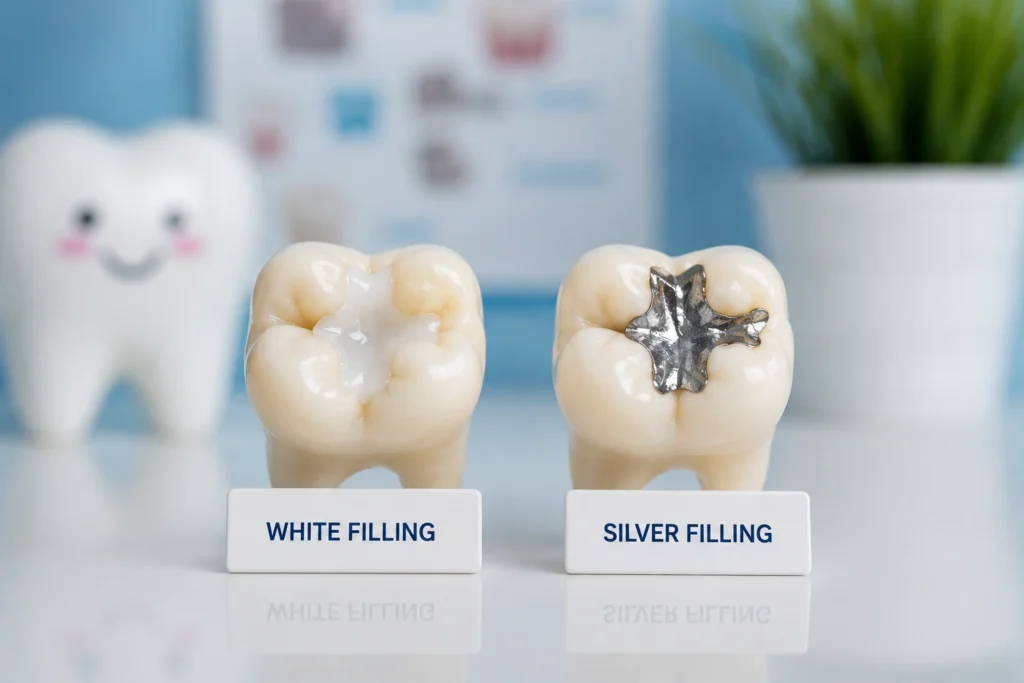
1. Silver (Amalgam) Fillings
Silver fillings, technically called dental amalgam, have been used for over a century. They’re made from a mixture of metals, including silver, tin, copper, and mercury bound together for durability.
Pros of silver fillings:
- Highly durable and long-lasting, especially for molars that handle heavy chewing pressure
- Less expensive compared to tooth-colored options
- Faster to place, which can help with less cooperative or younger children
- Resistant to moisture during placement, making the procedure more forgiving
Cons of silver fillings:
- Noticeably visible, which some children (especially older kids) may feel self-conscious about
- Requires more removal of healthy tooth structure to hold the filling in place
- Contains trace mercury, which — while considered safe by dental regulatory bodies in small amounts — makes some parents uneasy
- Can expand and contract with temperature changes, occasionally leading to small cracks over time
2. White (Composite Resin) Fillings
White fillings are made from a tooth-colored resin material that bonds directly to the tooth structure, blending naturally with the surrounding teeth.
Pros of white fillings:
- Cosmetically appealing — virtually invisible, which is great for front teeth or self-conscious kids
- Requires less removal of healthy tooth structure since the material bonds directly to the tooth
- Free from mercury, appealing to parents concerned about metal-based materials
- Bonds well for smaller to medium-sized cavities and can be used across most areas of the mouth
Cons of white fillings:
- Slightly less durable for very large cavities or heavy grinding, though modern composites have improved significantly
- Takes a bit longer to place due to layering and curing with a special light
- Can be more sensitive to moisture during the procedure, meaning a highly wiggly or anxious child may make the process trickier
- Generally costs a little more than silver fillings
So, Which One Is Actually Better for Kids?
The honest answer: it depends on your child’s specific situation. Here’s how an experienced pediatric dentist typically approaches the decision:
| Factor | Better Choice |
| Front teeth / visible teeth | White filling (cosmetic advantage) |
| Back molars with heavy chewing | Silver filling (extra durability) |
| Child anxious about appearance | White filling |
| Budget-conscious treatment | Silver filling |
| Concern about mercury exposure | White filling |
| Very young or highly wiggly child | Silver filling (faster placement) |
Many pediatric dentists today lean toward white fillings as the default choice for most cavities, thanks to advances in composite resin strength and the psychological benefit of a natural-looking smile. In fact, when parents consult the Best Pediatric Dentist in Pune, they’re often guided toward the option that balances both function and confidence for their child. That said, silver fillings still hold real value in specific cases — particularly for large cavities in back molars where durability under heavy biting force matters most.
At Soulful Dental Care, Dr. Swapnil Rachha evaluates each child individually — looking at the cavity’s size and location, the child’s cooperation level, dietary habits, and parental preference. As a well-established Dentist in Kothrud, Dr. Rachha takes the time to explain both options clearly to parents before recommending the most suitable one for their child.
Is the Filling Procedure Painful for Kids?
This is one of the biggest worries parents have, and understandably so. Both filling types are typically placed under local anesthesia, ensuring your child feels little to no discomfort during the procedure. Many pediatric dental clinics also use:
- Numbing gels before the injection to minimize pinch sensation
- Nitrous oxide (laughing gas) for anxious children
- Distraction techniques like cartoons, storytelling, or stress balls
- A calm, gentle chairside manner suited to children’s emotional needs
With the right approach, most kids handle filling procedures far better than parents expect. If your child feels anxious about dental visits, searching for a gentle Pediatric Dentist Near Me who specializes in child-friendly techniques can make all the difference in how they cope with treatment.
How Long Do Fillings Last in Children’s Teeth?
- Silver fillingscan last anywhere from 10–15 years, sometimes longer, depending on wear and oral hygiene.
- White fillingstypically last 5–10 years, though modern composites are closing this durability gap significantly.
Since baby teeth eventually fall out to make way for permanent teeth, longevity matters less for very young children and more for older kids whose fillings need to last until natural tooth loss or eruption of permanent teeth. This is exactly the kind of nuanced, age-specific advice a family gets when they consult the Best Dentist in Pune for their child’s ongoing dental care.
Cost Comparison: White vs Silver Fillings
Silver fillings are generally more budget-friendly, while white fillings come at a moderately higher price point due to the material cost and additional chair time required for placement. That said, many parents find the cosmetic and health-conscious benefits of white fillings worth the difference — especially for visible teeth.
It’s best to discuss exact pricing during a consultation, as costs vary based on cavity size, number of teeth involved, and the clinic’s treatment approach. Visiting a transparent, family-focused clinic — often recognized as the Best Dental Clinic in Kothrud — ensures you get an honest cost breakdown before any treatment begins.
Tips to Prevent Future Cavities in Kids
Regardless of which filling type your child receives, prevention remains the best strategy. Many parents searching for Best Dentists Near Me in Kothrud, Pune are surprised to learn that consistent preventive care can significantly reduce the need for future fillings altogether:
- Brush twice daily with fluoride toothpaste (age-appropriate amount)
- Floss once a day, especially between molars
- Limit sugary snacks and sticky candies
- Schedule dental check-ups every six months
- Consider dental sealants for deep-grooved molars
- Encourage water over sugary drinks and juices
Frequently Asked Questions (FAQs)
Q1. Are silver fillings safe for children despite containing mercury?
Yes. Dental amalgam has been extensively studied and is considered safe by major dental health authorities. The mercury is chemically bound within the alloy and released in extremely minute amounts, well within safety limits.
Q2. Can white fillings be used on baby teeth?
Absolutely. White fillings work well on both baby and permanent teeth, and are often preferred for their natural appearance and conservative approach to tooth structure.
Q3. Will insurance cover both types of fillings?
Coverage varies by provider and plan. Some insurance plans fully cover silver fillings but only partially cover the cost difference for white fillings. It’s best to check directly with your insurance provider.
Q4. How do I know if my child needs a filling?
Common signs include visible dark spots on teeth, sensitivity to hot or cold, complaints of pain while chewing, or a cavity spotted during a routine dental check-up.
Q5. Can a filling fall out, and what should I do if it does?
Occasionally, fillings can loosen or fall out due to wear, decay around the edges, or biting on very hard foods. If this happens, contact your dentist promptly to prevent further decay or sensitivity.
Final Thoughts: Making the Right Choice for Your Child
Both white and silver fillings are safe, effective, and time-tested solutions for treating cavities in children. The “better” option truly comes down to your child’s specific needs — the location and size of the cavity, cosmetic preferences, budget, and how cooperative your child is during dental visits.
Whatever you decide, the most important step is choosing a dental team you trust — one that treats your child with patience, care, and expertise. Dr. Swapnil Rachha and the team at Soulful Dental Care are committed to guiding parents through every decision with honesty and warmth, ensuring each child leaves the clinic feeling comfortable rather than anxious.
Book a consultation with Dr. Swapnil Rachha at Soulful Dental Care today and give your child the gift of a healthy, confident smile that lasts a lifetime.