

Losing a baby tooth is usually a happy milestone — a wiggly tooth, a tiny gap, maybe a visit from the tooth fairy. But when a baby tooth falls out too early because of decay, trauma, or infection, it isn’t always something to celebrate. Early tooth loss can quietly set off a chain of dental problems that affect your child for years to come. This is exactly where dental space maintainers step in.
If you’re a parent trying to understand what a space maintainer is, why your dentist is recommending one, and how it protects your child’s growing smile, this guide walks you through everything you need to know — in simple, practical terms.
Understanding Early Tooth Loss in Children
Baby teeth, or primary teeth, aren’t just placeholders that don’t matter. They play a critical role in chewing, speech development, and — most importantly — guiding permanent teeth into their correct positions. Each baby tooth essentially “reserves” space in the jaw for the adult tooth that will eventually replace it.
Children can lose baby teeth early due to several reasons:
- Untreated tooth decay or cavities that progress into infection
- Accidental falls or sports injuries
- Poor oral hygiene leading to premature extraction
- Underlying dental or medical conditions
When a tooth is lost naturally around the expected age, the body’s timeline usually keeps things on track. But when it happens too soon, the space left behind becomes vulnerable.
What Exactly Is a Space Maintainer?
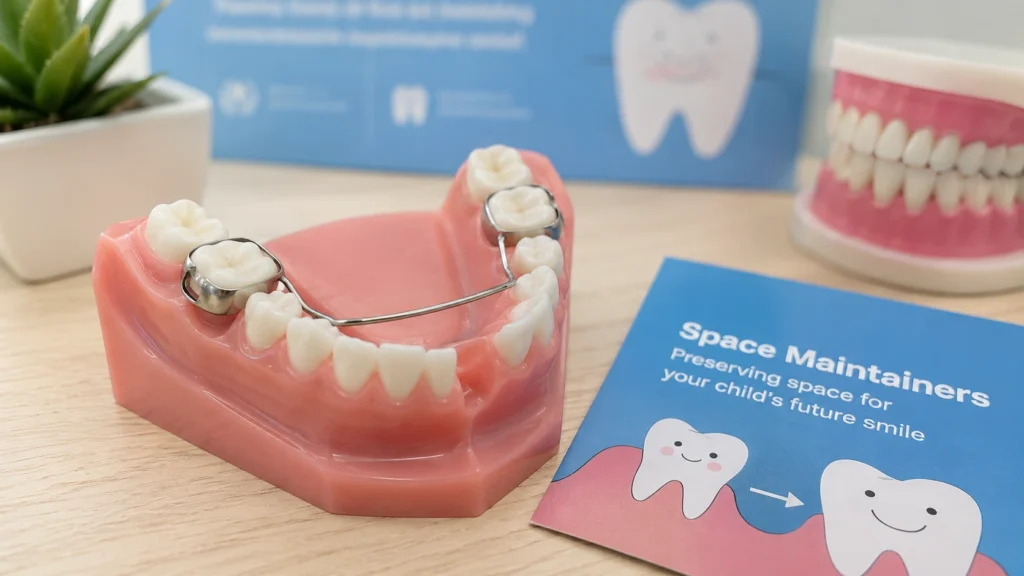
A space maintainer is a small, custom-made dental appliance — usually made of metal or a combination of metal and acrylic — that is fitted into the gap left by a prematurely lost tooth. Its job is simple but crucial: hold that space open until the permanent tooth is ready to erupt naturally.
Space maintainers come in different forms depending on the child’s needs:
- Band and loop maintainers – used when a single tooth is missing, holding space with a metal band on the neighboring tooth connected by a loop.
- Distal shoe appliances – used for children who lose a second primary molar before the permanent first molar has erupted.
- Lingual holding arches – used when multiple teeth are missing on the lower jaw, maintaining space across a wider area.
- Removable space maintainers – similar to a retainer, these can be taken out for cleaning but require good compliance from the child.
Your dentist will choose the type based on which tooth was lost, the child’s age, and how much time remains before the permanent tooth is due to appear.
Why Space Matters So Much
Here’s the thing about baby teeth: neighboring teeth don’t just sit still and wait patiently for the permanent tooth to arrive. The moment a gap appears, nearby teeth begin to drift and tilt into that empty space, almost like books falling sideways when one is removed from a shelf.
This drifting causes a cascade of problems:
- Crowding and misalignment — the permanent tooth may not have enough room to erupt properly, leading to crooked or impacted teeth.
- Bite problems — shifting teeth can alter how the upper and lower jaws meet, sometimes resulting in an improper bite.
- Delayed or blocked eruption — the permanent tooth may get stuck beneath the gum because the space has closed up.
- Future orthodontic needs — what could have been prevented with a simple appliance may later require braces or more extensive orthodontic treatment.
A space maintainer essentially acts as a placeholder, preventing this domino effect before it starts.
Search Intent: What Parents Are Really Asking
When parents search for information on this topic, they’re usually looking for reassurance and clarity. Common questions include: Is a space maintainer really necessary? Will it hurt my child? How long will it need to stay in? Understanding this intent helps explain why timely dental consultation matters so much — the earlier the concern is addressed, the simpler and less invasive the solution tends to be.
Benefits of Getting a Space Maintainer for Your Child
1. Preserves Natural Alignment
By holding the space open, the appliance allows the permanent tooth to erupt in its intended position, reducing the likelihood of crowding.
2. Reduces Need for Future Orthodontic Treatment
Children who receive timely space maintenance are statistically less likely to need extensive braces or corrective procedures later.
3. Supports Healthy Chewing and Speech
Gaps left untreated can affect how a child bites, chews, and even pronounces certain sounds, especially in the front of the mouth.
4. Prevents Bad Habits
An open gap can sometimes encourage tongue-thrusting or thumb-sucking habits that further complicate alignment.
5. Protects Self-Confidence
A properly maintained smile helps children feel comfortable and confident, especially during school-age years when appearance matters more to them.
When Should Parents Act?
Timing is everything with space maintainers. Ideally, a child should be evaluated within a few weeks of losing a tooth prematurely — whether due to decay, injury, or extraction. Waiting too long allows neighboring teeth to shift, which can make treatment more complicated or even reduce the effectiveness of a space maintainer altogether.
If your child has lost a tooth early, don’t wait for the next routine check-up. A prompt visit to a qualified pediatric dental professional can make all the difference in your child’s long-term oral development.
Caring for a Space Maintainer at Home
Once fitted, a few simple habits help ensure the appliance does its job effectively:
- Encourage regular brushing around the appliance, being gentle but thorough
- Avoid sticky, chewy, or hard foods that could dislodge or damage it
- Discourage children from playing with the appliance using their tongue or fingers
- Keep up with follow-up dental visits to monitor progress and eruption timing
With good care, most space maintainers stay comfortably in place until the permanent tooth naturally pushes them out or your dentist decides it’s time for removal.
Why Professional Guidance Matters
Choosing the right type of space maintainer, fitting it correctly, and monitoring your child’s dental development over time requires experience and precision. This is not a one-size-fits-all appliance — every child’s mouth, growth pattern, and dental history is different.
At Soulful Dental Care, children receive individualized attention from a team that understands how important early intervention is for long-term oral health. Under the guidance of Dr. Swapnil Rachha, families in the area have a trusted resource for gentle, child-friendly dental care that focuses on prevention as much as treatment.
Parents searching for a reliable Dentist in Kothrud often want more than just a quick fix — they want a clinic that explains the “why” behind every recommendation and treats their child with patience and care. That approach to dentistry is what makes early consultation so valuable when a baby tooth is lost ahead of schedule.
Choosing the Right Dental Clinic for Your Child
Not every dental practice is equipped to handle the nuances of pediatric appliances like space maintainers. When searching for the Best Dental Clinic in Kothrud, look for a team with specific experience in children’s dentistry, a calm and welcoming environment, and a track record of clear communication with parents.
For families across the wider Pune region, finding the Best Dentists Near Me in Kothrud, Pune often starts with word-of-mouth recommendations and online reviews — but what matters most is how a clinic handles the actual appointment: does the child feel safe, is the process explained clearly, and are follow-ups scheduled proactively?
A dedicated Pediatric Dentist in Pune brings specialized training in managing children’s dental anxiety, growth patterns, and appliance fitting — all of which are essential when dealing with early tooth loss.
Frequently Asked Questions
1. At what age is a space maintainer usually needed?
It can be needed anytime a child loses a primary tooth significantly earlier than its natural exfoliation age, which typically ranges from 6 to 12 years depending on the tooth.
2. Does fitting a space maintainer hurt?
The procedure is generally painless and non-invasive. Most children adjust to wearing the appliance within a day or two.
3. How long does a child need to wear one?
This varies by case but usually lasts until the permanent tooth is ready to erupt, which can range from several months to a couple of years.
4. Can a space maintainer fall out on its own?
Yes, sometimes appliances can loosen, especially with sticky foods or rough play. If this happens, a prompt dental visit is recommended to refit or replace it.
5. Is a space maintainer the same as braces?
No. A space maintainer simply holds existing space open, while braces actively move teeth into new positions. They serve different purposes at different stages.
6. What happens if we skip getting a space maintainer?
Skipping treatment can lead to teeth drifting into the gap, crowding, bite issues, and a higher chance of needing orthodontic correction later.
Final Thoughts: Don’t Wait, Consult Early
Early tooth loss in children is more common than many parents realize, but it doesn’t have to lead to long-term dental complications. A timely visit to an experienced pediatric dental team can prevent a small issue from becoming a much bigger orthodontic challenge down the road.
If your child has recently lost a baby tooth earlier than expected, don’t leave it to chance. Book a consultation with Dr. Swapnil Rachha at Soulful Dental Care today. As a trusted Best Dentist in Pune, our team is committed to giving your child’s smile the best possible start — with gentle, expert care every step of the way.
Searching for a Pediatric Dentist Near Me? Call us today or visit our clinic in Kothrud to schedule your child’s evaluation. The sooner we assess the gap, the simpler and more effective the solution will be.