

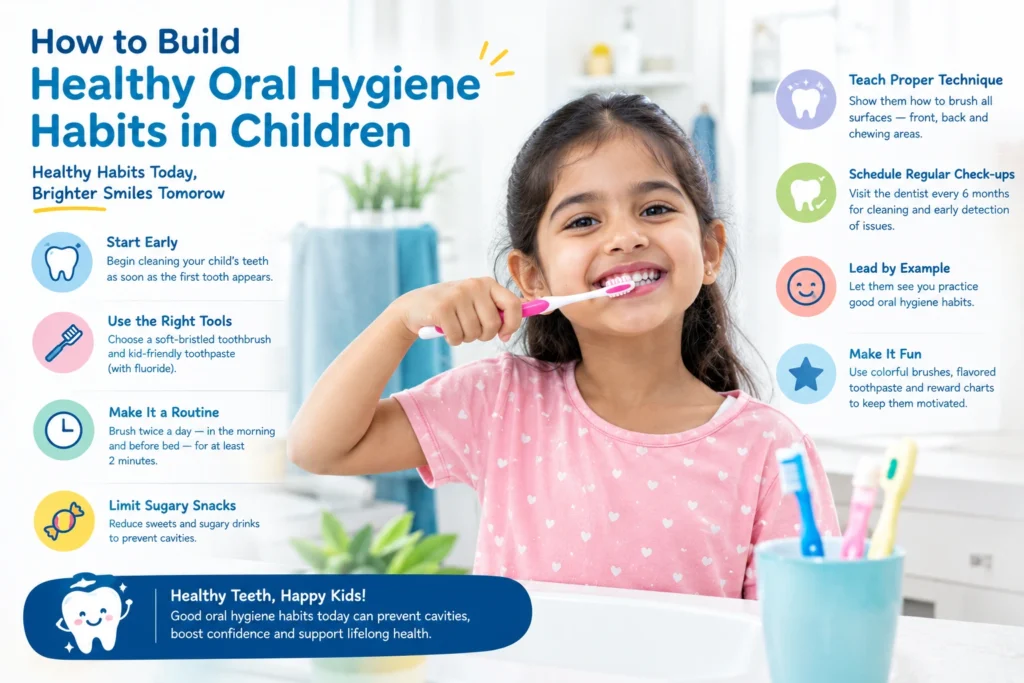
Healthy oral hygiene habits should begin early in childhood. Good dental care is not just about preventing cavities; it also supports healthy gums, proper tooth development, comfortable eating, and a confident smile. Children who learn good oral hygiene habits early are more likely to continue them as they grow.
At Soulful Dental Care, Dr. Swapnil Rachha helps parents understand how to make brushing, flossing, healthy eating, and regular dental visits a natural part of a child’s daily routine.
Why Are Oral Hygiene Habits Important for Children?
Children’s teeth are vulnerable to plaque and tooth decay. Baby teeth also play an important role in chewing, speech development, and maintaining space for permanent teeth.
Poor oral hygiene may contribute to:
- Tooth decay and cavities
- Gum inflammation
- Bad breath
- Tooth sensitivity
- Difficulty eating
- Premature loss of baby teeth
A preventive approach can help children maintain healthy teeth while developing positive attitudes toward dental care.
When Should Parents Start Oral Hygiene Care?
Oral hygiene should begin even before the first tooth appears.
Before the First Tooth
Parents can gently clean the baby’s gums with a clean, soft, damp cloth. This removes residue and helps the child become familiar with having their mouth cleaned.
After the First Tooth Appears
Once the first tooth erupts, use a soft-bristled baby toothbrush and an age-appropriate amount of fluoride toothpaste.
As children become older, parents should continue supervising brushing to make sure all tooth surfaces are cleaned properly.
1. Teach Your Child to Brush Twice a Day
Brushing twice daily is one of the most important habits for preventing tooth decay.
Make Brushing Simple
Encourage your child to brush:
- In the morning
- Before bedtime
- For approximately two minutes each time
Use a soft toothbrush that fits comfortably in your child’s mouth.
Make It Fun
Children may be more interested in brushing when parents make it enjoyable. You can:
- Sing a two-minute brushing song
- Use a brushing timer
- Let your child choose a toothbrush
- Brush together as a family
Parents searching for a Pediatric Dentist Near Me can also ask about age-appropriate brushing techniques during routine dental visits.
2. Teach Proper Brushing Technique
Simply brushing is not enough if important areas are missed.
Teach your child to gently clean:
- The outside surfaces of teeth
- Inside surfaces
- Chewing surfaces
- Along the gum line
- The tongue
Young children may not have the coordination needed to brush effectively on their own. Parents should supervise and, when necessary, help finish the brushing.
3. Introduce Flossing at the Right Time
Flossing becomes important when two of your child’s teeth touch each other.
A toothbrush cannot effectively clean the tight spaces between teeth. Flossing helps remove food particles and plaque from these areas.
Parents can ask a Dentist in Kothrud for a demonstration of child-friendly flossing techniques.
4. Encourage Healthy Eating Habits
Diet has a major influence on children’s dental health.
Choose Tooth-Friendly Foods
Encourage:
- Fresh fruits
- Vegetables
- Cheese
- Plain yogurt
- Whole grains
- Water
Limit Frequent Sugary Snacks
Try to reduce frequent consumption of:
- Candies
- Chocolates
- Sweetened beverages
- Biscuits
- Sticky snacks
The frequency of sugar exposure matters because repeated exposure to sugar can increase the risk of tooth decay.
5. Make Water the Preferred Drink
Water is an excellent choice between meals. It helps keep the mouth hydrated and can help rinse away food particles.
Parents should avoid routinely giving children sugary drinks throughout the day. Juices and sweetened beverages can contribute to prolonged exposure to sugars.
6. Do Not Ignore Baby Teeth
A common misconception is that baby teeth do not need much care because they eventually fall out.
Baby teeth are important because they:
- Help children chew
- Support speech development
- Maintain space for permanent teeth
- Contribute to normal oral development
Untreated decay in baby teeth can cause pain and infection and may affect a child’s overall dental experience.
7. Schedule Regular Dental Check-Ups
Regular dental visits allow problems to be detected before they become more serious.
A dental check-up may include:
- Examination of teeth and gums
- Assessment of tooth eruption
- Evaluation of oral hygiene
- Cavity detection
- Preventive care recommendations
Visiting a trusted Best Dental Clinic in Kothrud can help parents receive personalized advice based on their child’s age and dental development.
8. Create a Consistent Dental Routine
Children respond well to predictable routines.
Try following the same sequence every day:
Wake up → Brush → Breakfast → School → Evening routine → Brush before bed
Consistency helps oral hygiene become a habit rather than a task that children can easily avoid.
9. Lead by Example
Children learn by watching their parents.
When children see parents brushing and flossing regularly, they understand that oral hygiene is an important part of everyday life.
Try brushing together and talking positively about dental care. Avoid discussing dental fear or painful experiences in front of your child.
10. Use Positive Reinforcement
Instead of forcing your child to brush, encourage and praise their efforts.
You can create a simple brushing chart and celebrate consistent habits with non-food rewards.
Avoid using sweets as rewards because this can work against healthy dental habits.
How a Pediatric Dentist Can Help
Professional guidance can make it easier for parents to understand their child’s specific oral health needs.
A Pediatric Dentist in Pune can provide advice regarding brushing, fluoride toothpaste, diet, cavity prevention, dental anxiety, and developing teeth.
At Soulful Dental Care, Dr. Swapnil Rachha focuses on creating positive dental experiences while helping children and parents build practical oral hygiene routines.
For families seeking the Best Dentist in Pune, preventive pediatric care can be an important part of protecting a child’s smile as they grow.
Common Mistakes Parents Should Avoid
Allowing Children to Brush Without Supervision
Young children may miss areas or use incorrect techniques.
Frequent Sugary Snacking
Repeated sugar exposure can increase cavity risk.
Delaying Dental Visits
Waiting until a child has pain may mean a problem has already progressed.
Using Too Much Toothpaste
Use the amount appropriate for your child’s age and follow professional recommendations.
People Also Ask: FAQs
Q1. At what age should children start brushing their teeth?
Brushing should begin as soon as the first tooth appears. Parents should supervise young children.
Q2. How often should children brush?
Children should generally brush twice a day, including before bedtime.
Q3. When should children start flossing?
Flossing should begin when two teeth touch and food or plaque can accumulate between them.
Q4. Are baby teeth really important?
Yes. Baby teeth support chewing and speech and help maintain space for permanent teeth.
Q5. How often should my child visit a dentist?
Routine dental visits should be scheduled according to your dentist’s recommendation, commonly every six months.
Q6. How can I make my child enjoy brushing?
Make brushing fun with songs, timers, colorful toothbrushes, and family brushing routines.
Why Choose Soulful Dental Care?
Building good oral hygiene habits is easier when children receive consistent professional guidance.
At Soulful Dental Care, Dr. Swapnil Rachha provides child-focused dental care in a comfortable environment. Parents looking for Best Dentists Near Me in Kothrud, Pune can seek professional guidance on preventive care, brushing habits, diet, and their child’s developing smile.
The goal is not simply to treat dental problems but to help children develop healthy habits that last into adulthood.