

A root canal is one of dentistry’s most misunderstood procedures. Most people picture pain, but in reality, it’s designed to relieve pain by removing infected pulp and saving your natural tooth. Still, the days and weeks after treatment matter just as much as the procedure itself. How you care for your tooth afterward determines whether your recovery is smooth or complicated.
If you’ve recently undergone a root canal, or you’re searching for guidance ahead of one, this guide walks you through exactly what to do, what to avoid, and when to call your dentist.
Understanding What Happens After a Root Canal
During root canal therapy, your dentist removes infected or inflamed pulp from inside the tooth, cleans the canal, and seals it. While the procedure eliminates the source of infection and pain, your tooth and surrounding gum tissue still need time to settle. Mild soreness, sensitivity to pressure, or slight swelling for a day or two is completely normal.
The real key to a successful outcome isn’t just the treatment itself — it’s the aftercare. Neglecting post-treatment instructions can lead to reinfection, a cracked tooth, or the need for retreatment.
Immediate Aftercare: The First 24-48 Hours
The first two days set the tone for your entire recovery. Here’s what to focus on:
1. Avoid Chewing on the Treated Side
Your tooth is temporarily weaker until a permanent crown or filling is placed. Chewing hard or sticky foods on that side can crack the tooth or dislodge the temporary filling.
2. Manage Discomfort Properly
Mild pain or tenderness is expected. Over-the-counter pain relievers, as recommended by your dentist, are usually enough. Avoid aspirin if you’re prone to bleeding, and always follow your dentist’s specific dosage instructions.
3. Stick to Soft Foods
Soups, mashed potatoes, yogurt, smoothies, and scrambled eggs are gentle on a recovering tooth. Avoid anything too hot, cold, or crunchy for the first day or two.
4. Maintain Gentle Oral Hygiene
Continue brushing and flossing, but be gentle around the treated area. Skipping oral hygiene altogether can actually increase infection risk.
Long-Term Care for a Lasting Recovery
Once the initial sensitivity fades, long-term care becomes about protecting your tooth for years to come.
Get a Permanent Crown or Filling Promptly
A root canal-treated tooth is more brittle than a natural one because it no longer receives nourishment from the pulp. Delaying your permanent crown or filling leaves the tooth vulnerable to fracture. Most dentists recommend completing this step within a few weeks of the root canal.
Practice Consistent Oral Hygiene
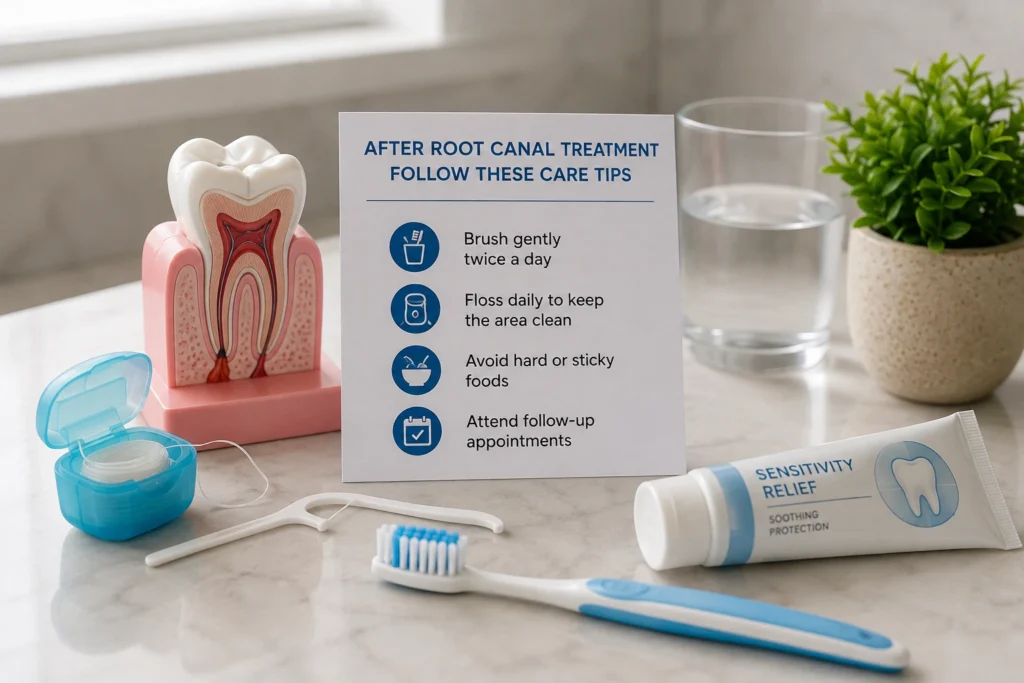
Brush twice daily with a soft-bristled toothbrush and fluoride toothpaste, and floss once a day. Good hygiene prevents new decay from forming around the treated tooth or in neighboring teeth.
Avoid Hard and Sticky Foods
Even after full recovery, treated teeth are more prone to cracking. Be cautious with ice, hard candies, nuts, and sticky caramels, especially on that side of your mouth.
Don’t Skip Follow-Up Visits
Your dentist will want to check the tooth’s healing progress through periodic follow-ups and X-rays. This helps catch any complications early, before they become bigger problems.
Watch for Warning Signs
While complications are rare, contact your dentist promptly if you notice:
- Persistent or worsening pain beyond a few days
- Swelling in the face, gums, or jaw
- A visible crack or the crown/filling coming loose
- A recurring pimple-like bump on the gum near the tooth
- Fever accompanying dental discomfort
These symptoms could indicate infection or reinfection, which needs prompt attention rather than a wait-and-watch approach.
Common Mistakes People Make After a Root Canal
Even well-intentioned patients sometimes slow down their own recovery. Common missteps include:
- Chewing too soon on the treated tooth before the permanent restoration is placed
- Skipping the crown appointment, leaving the tooth exposed to fracture risk
- Ignoring mild symptoms that gradually worsen instead of reporting them early
- Using the wrong toothbrush, causing unnecessary irritation to sensitive gums
- Self-medicating with random painkillers instead of following dentist-approved guidance
Avoiding these mistakes can be the difference between a tooth that lasts decades and one that needs retreatment.
Why Choosing the Right Dental Clinic Matters
Aftercare instructions are only as good as the treatment behind them. A precise, well-executed root canal reduces the chances of complications in the first place. This is why choosing an experienced, detail-oriented dental team is so important.
At Soulful Dental Care, patients receive not just expert root canal treatment but also clear, personalized aftercare guidance tailored to their specific case. Led by Dr. Swapnil Rachha, the clinic focuses on minimally invasive, pain-managed procedures so that recovery is as comfortable as possible.
If you’re researching a trusted Dentist in Kothrud, it helps to choose a clinic that prioritizes both the procedure and what happens after you leave the chair.
What Sets a Good Recovery Experience Apart
A smooth root canal recovery usually comes down to three things: an accurately performed procedure, clear aftercare instructions, and a dental team that’s easy to reach if something feels off. Clinics that combine modern technology with a patient-first approach tend to see fewer post-treatment complications and higher long-term success rates for treated teeth.
Frequently Asked Questions
Q1. How long does pain last after a root canal?
Mild discomfort typically subsides within 2-3 days. If pain persists beyond a week or intensifies, contact your dentist.
Q2. Can I eat normally after a root canal?
Stick to soft foods for the first 24-48 hours and avoid chewing on the treated side until your permanent crown or filling is placed.
Q3. Is it normal for the tooth to feel different after treatment?
Yes, some tenderness or a slightly different bite sensation is common initially, especially if a temporary filling is in place.
Q4. How soon should I get a permanent crown after a root canal?
Ideally within 2-4 weeks, as delaying it increases the risk of the tooth cracking.
Q5. What happens if I ignore aftercare instructions?
Ignoring aftercare can lead to reinfection, tooth fracture, or the need for retreatment or extraction.
Q6. Can a root canal-treated tooth get infected again?
Yes, if bacteria re-enter through an unsealed crack or delayed restoration. Regular check-ups help catch this early.
Take the Next Step Toward a Pain-Free Smile
Root canal treatment saves your natural tooth, but proper aftercare is what makes that outcome last a lifetime. Whether you’ve just had the procedure or are searching for a clinic to perform one, working with an experienced team makes all the difference.
If you’re looking for the Root Canal Treatment in Kothrud, our team is here to guide you through every step, from diagnosis to full recovery. As one of the trusted names offering the Best root canal treatment in Pune, we combine precision, comfort, and honest aftercare advice so your smile stays healthy for years to come.
Searching for the Best Dental Clinic in Kothrud? Recognized as a Dental Clinic in Kothrud with a strong focus on patient comfort, our practice is consistently rated among the Best Dentists Near Me in Kothrud, Pune. With a reputation built on trust and clinical excellence, we’re proud to be considered among the Best Dentist in Pune for root canal and restorative care.
Book your consultation today and experience aftercare guidance that actually helps your recovery, not just a printed handout on your way out the door.
Call us now or visit our clinic to schedule your appointment and take the first step toward a healthier, pain-free smile.